
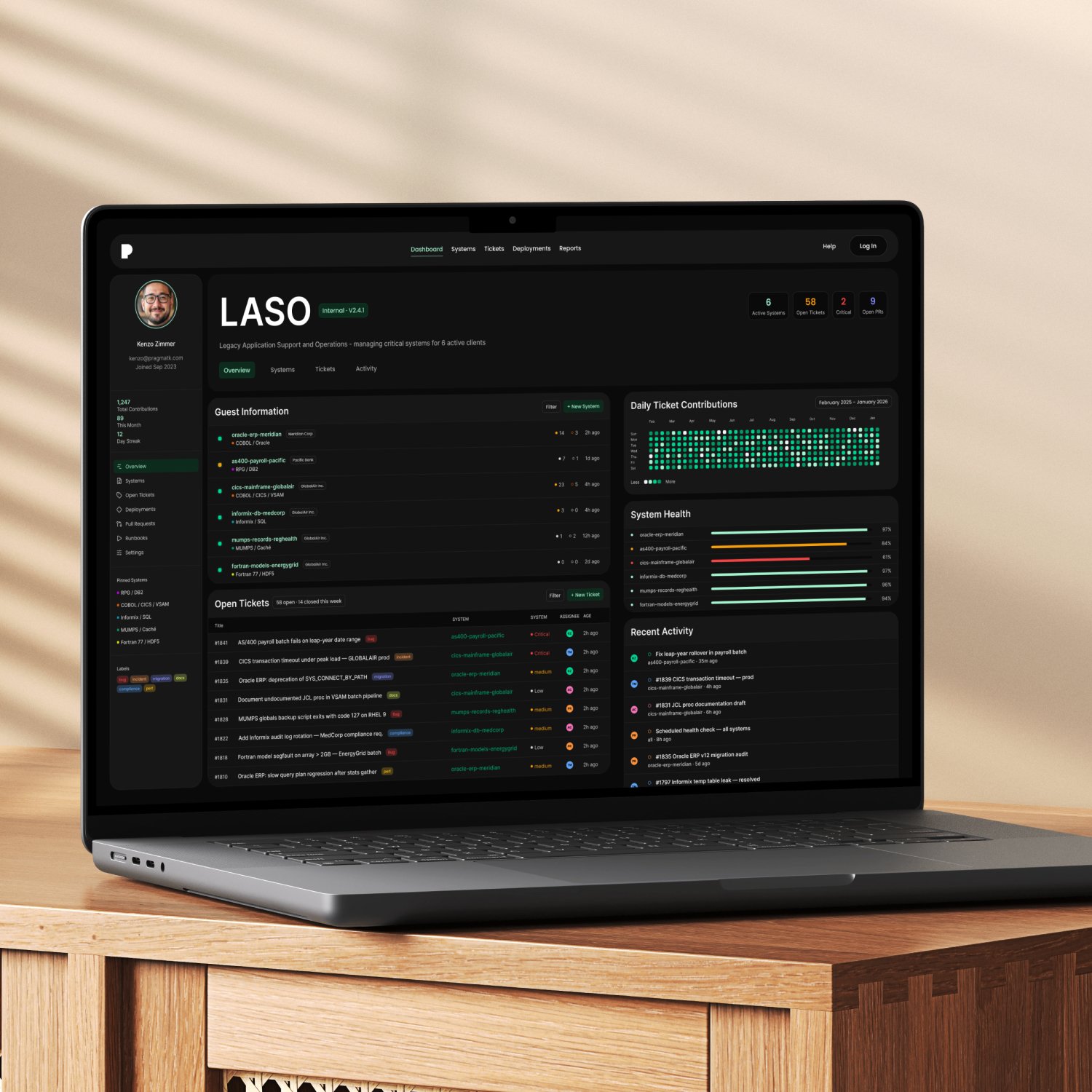
Keep critical systems running.
Hello LASO
LASO gives business-critical software dependable engineering ownership, support, documentation, and operational coverage.
The situation
Critical software becomes risky when knowledge gets concentrated.
The system still works. The people who understand it are harder to replace. Documentation falls behind. Small changes become harder to make with confidence.
LASO gives that system a team, a process, and clear ownership. I would make this section editorial, with one large image and three short signals beside it:
Knowledge lives with one person
Support is inconsistent
Changes carry unnecessary risk
A good fit
LASO works best when the system still matters.
The original team has moved on.
Data and production path remain unclear.
One person knows how everything works.
Continuity depends on individual knowledge.
Documentation is incomplete.
Every issue requires rediscovery.
The system needs regular care.
Maintenance, fixes, releases, and monitoring.
Your internal team has higher priorities.
The system needs ownership without consuming the people building.
How LASO works
Take ownership. Build knowledge. Keep it stable.
Four ways in. One accountable team through the work.
01
Assess
Understand the code, infrastructure, dependencies, backlog, and operating risk.
02
Stabilize
Address recurring issues, establish monitoring, and create a reliable support baseline.
03
Document
Capture architecture, runbooks, dependencies, decisions, and operating knowledge.
04
Operate
Maintain, support, monitor, release, and improve the system over time.
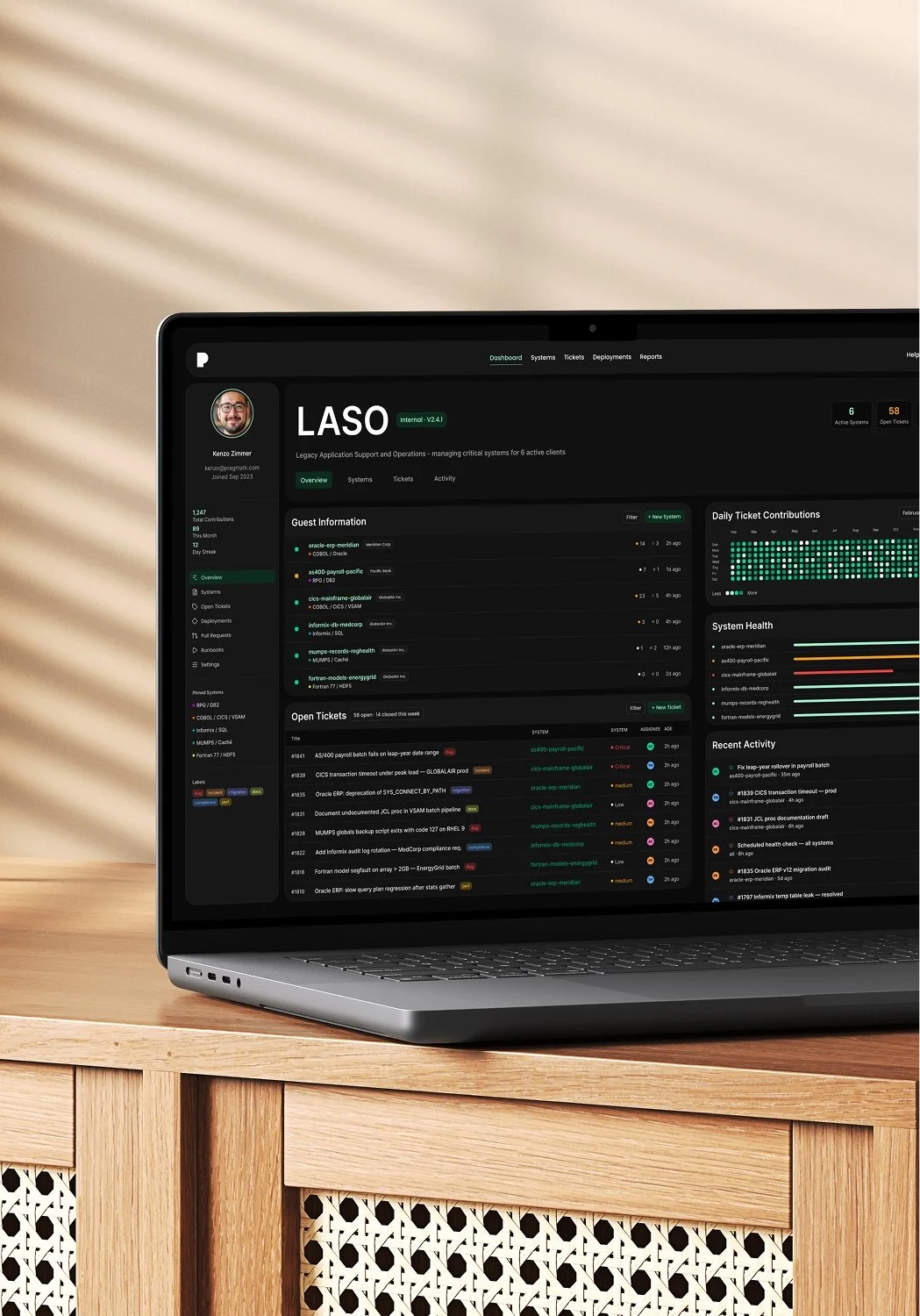
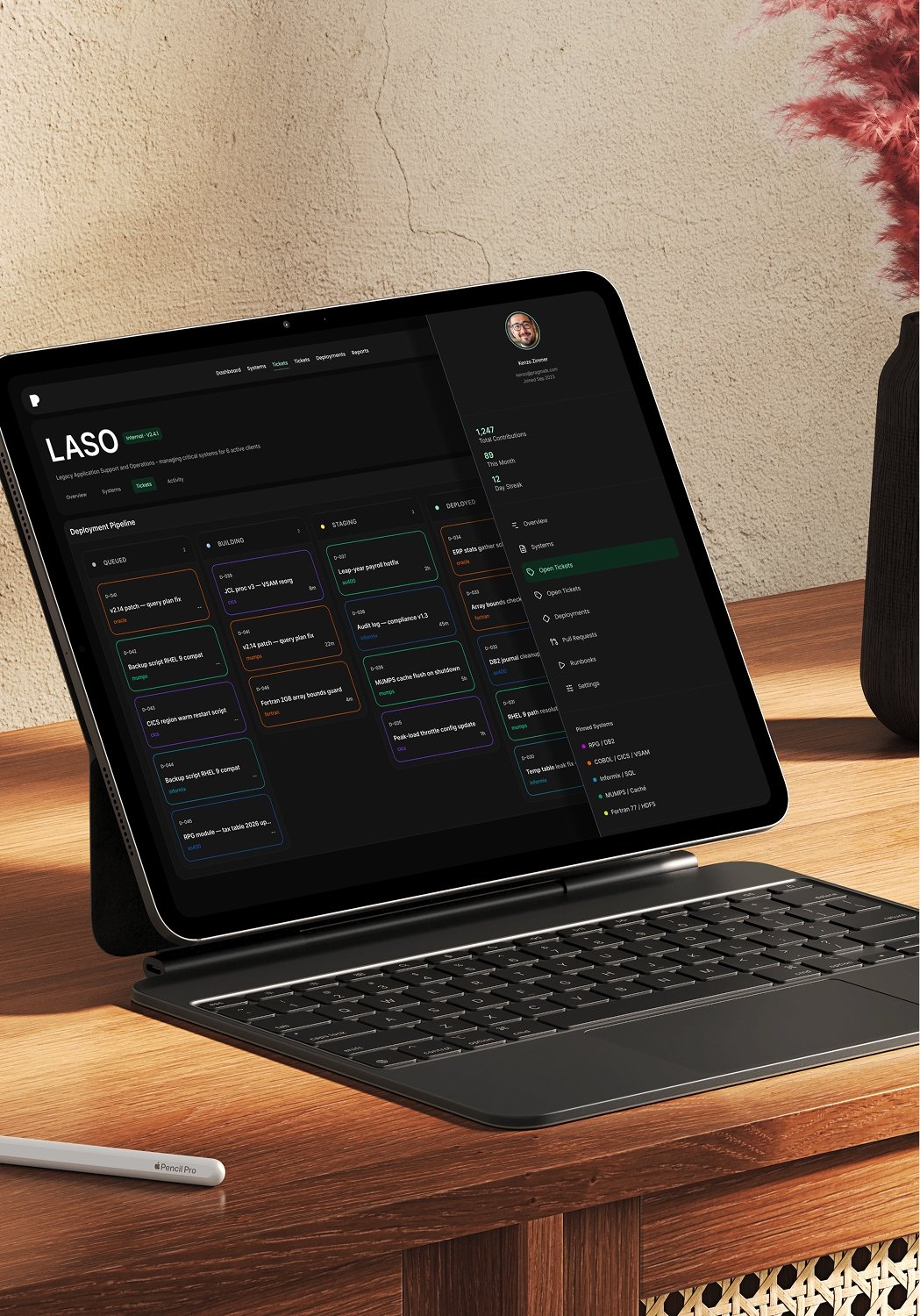
Operational visibility
You should always know the health of the system.
LASO replaces tribal knowledge and ad hoc support with shared visibility into issues, ownership, system health, and ongoing work.
Week 1
Access established. Environments reviewed. Monitoring and operating context mapped.
Week 2 - 3
System assessment completed. Risks documented. Support priorities established.
Week 4
Operating rhythm begins. Runbooks are in place. Ownership and escalation paths are clear.
What We Need
System access, infrastructure access, available documentation, and time with the people who know the system today.
What we own
The day-to-day work required to keep the system dependable.
Application maintenance
Incident response
Bug resolution
Monitoring
Release support
Documentation
Knowledge transfer
Backlog management
Dependency management
Vendor coordination
Operational reporting
Shared senior coverage
Find out what the system needs.
Start with a focused assessment. We will review the system, identify the operating risks, and define what dependable ownership should look like.